Pests we treat
Whatever the pest, the job is to finish it.
We have spent years treating homes and workplaces. If you are not sure what you are dealing with, contact us and we will work it out on the phone or after a visit.
Rats and rat removal
We provide a professional, discreet and guaranteed rodent treatment around Derby and Nottingham. Using a professional controller means access to products that are not sold in shops, and the skill to place them so the problem is solved rather than scattered.
Why rats need controlling
- They can spread leptospirosis, salmonella and listeria.
- Constant gnawing damages pipework and electrical cables.
- A rat on a business premises is a reputation problem the moment it is filmed.
- Occupiers have an obligation to keep a property rodent-free.
How we get rid of them
Treatment is a mix of trapping, poison where it is appropriate, proofing and environmental management. Before anything is placed, we talk through the options. The aim is to stop the rats and close the reason they were there.
Mice and mouse control
Mouse control is discreet and guaranteed, carried out by a qualified technician. Mice spread salmonella and listeria, and they have caused serious fires by gnawing electrical cables and gas pipes. An infestation can also damage a business reputation.
We use trapping, poison, proofing and environmental management, with professional-use products applied properly. Do not wait. Mice are highly mobile and breed quickly, so a small problem becomes a large one if it is left.
Wasps and nest removal
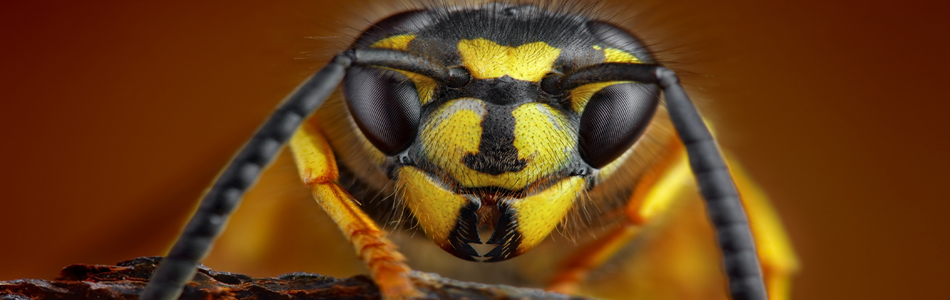
Treatments are quick, effective and guaranteed: the aim is to kill the wasps and destroy the nest. The most effective method is to treat the nest itself, or the external entry hole, with a professional insecticide. That is dangerous and should only be done by a pest controller. It is not a job to attempt yourself.
Wasp treatments have been provided for years, including under the trading name Derby Wasp Control. The service is quick, safe and guaranteed, whether the nest is spoiling the garden or sitting in a roof.
Bed bugs
A specialist team works on bed bugs across Derby and Nottingham. They are common in the UK, usually spread by bad luck rather than poor housekeeping: travel, or second-hand furniture, is the usual source.
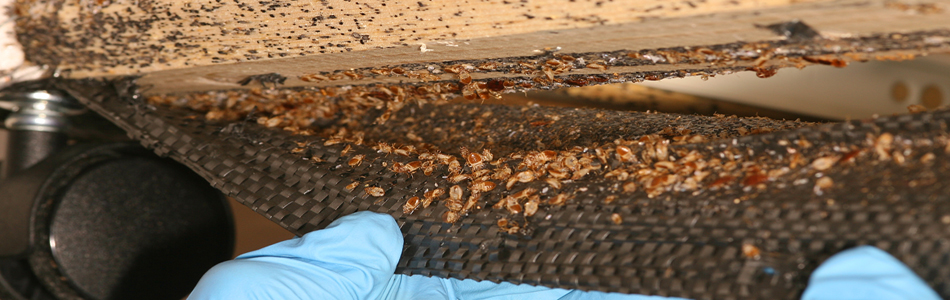
Adults look like a small brown disc, up to about 6mm, and are visible to the naked eye. Nymphs and eggs are much smaller and easy to miss. They hide in cracks in the bed, surrounding furniture, and behind skirting and floorboards, and they are mainly active at night.
Signs of an infestation
- Red, irritating bites, often in rows on the neck, shoulders, back, legs or arms.
- Clusters of dark spots, about 1mm, like ink dots on the bed frame or underside of the mattress.
- Small blood smears on linen or the headboard.
- The insects themselves around the sleeping area.
How we get rid of them
Act immediately. Bed bugs are difficult even for many pest controllers, so a specialist survey comes first. We can offer a natural or organic treatment, heat treatment, or a traditional chemical treatment. The choice depends on the survey and what you prefer. For a hotel or bed and breakfast, an untreated infestation can mean refunds and public reviews.
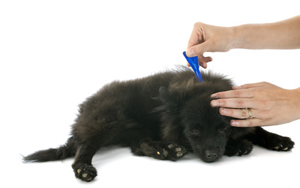
Fleas and flea treatments
Fleas are parasites of warm-blooded animals. They can live up to two years and lay up to 1,000 eggs. Eggs drop into floors and animal bedding, become larvae, and the adults wait for vibration from a host before they emerge and bite. They concentrate in living rooms and bedrooms where pets sleep, in carpets and pet bedding, and they bite both people and animals.
If they are not dealt with professionally they survive and spread quickly. Our standard treatment is a residual insecticide that keeps killing fleas for a number of weeks. Do not vacuum or wash the treated area for at least two weeks, longer if you can, or the treatment can fail. Before we treat, we ask you to clear floor space and vacuum thoroughly so the product reaches the insects.
Moths and moth control
Only a few UK moths damage carpets, textiles and wool. Most of the damage is done by feeding larvae, not the adult moths. Left alone, an infestation can ruin blankets, wool carpets, garments and upholstery. Adults do little feeding damage; the larvae that hatch from sticky eggs eat wool, hair, fibres and fur.
We use professional products: usually a ULV and spray treatment for adults, a separate treatment for larvae, and traps to monitor the infestation so it does not grow while the treatment works.
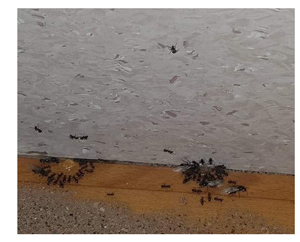
Ants and ant treatments
The black garden ant is the species that most often invades homes. Other species can be treated as well. If you see ants in early spring, deal with them before the colony expands. Left until summer, you may meet flying ants: the winged males and females that swarm on a few hot days in July or August. After mating, the female finds a nest site, overwinters, and starts a new colony the following spring.
We use professional insecticides, from sprays to gel baiting, and a fully organic treatment if you prefer. Gel baits are carried by workers back to the larvae and queen, which collapses the colony. It can take a number of weeks, and it costs more than a shop spray, but it is aimed at the nest rather than the ants on the worktop.
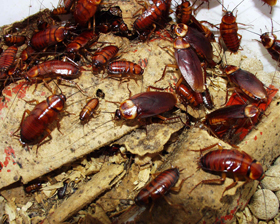
Cockroaches
The two main species in Britain are the Oriental cockroach and the German cockroach. Both have long whip-like antennae, flat oval bodies and a rapid, jerky walk. The adult German cockroach is light yellow-brown and about 10–15mm long. The Oriental cockroach is dark brown or black and about 20–24mm long.
They do not thrive outdoors here. They live around heating ducts, electrical equipment and boiler rooms in centrally heated buildings: restaurants, hospitals, bakeries, hotels and kitchens. They will feed on almost anything, but they need water nearby. They contaminate food, utensils and surfaces, and can carry organisms that cause food poisoning. For a food business they can also mean environmental health action.
Insecticide has to reach the insect, which is why we use professional gel products. Because of the public health risk, this is not a do-it-yourself job.
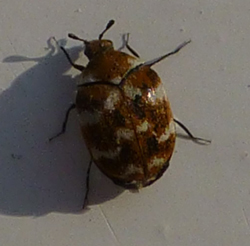
Beetles and beetle control
Pest beetles can damage a property or spread disease. The ones we are asked about most often include carpet beetles and woolly bears, biscuit beetles, furniture beetles (woodworm), tobacco beetles and ground beetles. Many are extremely difficult without a professional-grade product. If you are not sure which beetle you have, the survey includes identification before any treatment is recommended.
Bees
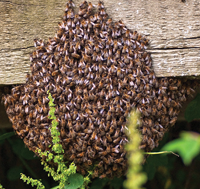
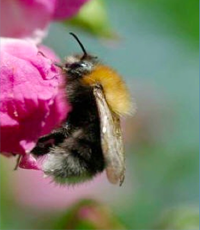
Tree bees and honeybees sometimes nest in lofts, chimneys and other parts of a building, and the activity worries people. It is a misconception that every bee is protected and that control is always illegal. If bees cannot be moved and they are causing a risk, control can be appropriate.
We would rather not eradicate bees that are not causing a problem. Where children are at risk, or the nest cannot stay, the first recommendation is a local beekeeper who may move the colony. Only if a beekeeper cannot or will not help do we consider a control programme. Treating a nest directly is work for a qualified, insured technician.
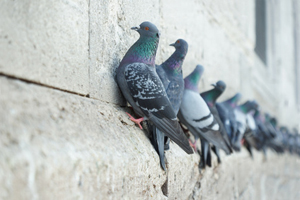
Pest birds: pigeons and gulls
Pigeons and gulls bring noise, droppings and disease. Droppings stain and damage stone, smell, and can erode paint and metal pipes. Nesting birds can be aggressive, and their nests bring other insects such as mites, beetles and fleas.
There is no single method. Each building needs its own mix of netting, spiking, gels, wires and deterrents. We survey the ledges and roosts first, then proof the points the birds are actually using.
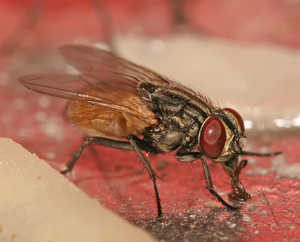
Flies and fly control
House flies, blow flies and cluster flies are the species that most often affect homes and food businesses. They are linked with the spread of diseases including salmonella, dysentery and tuberculosis. Technicians identify the species first, because the treatment depends on it. A common method for knocking down large numbers of adults is a ULV or fogging treatment, followed by proofing so the next generation does not simply replace them.
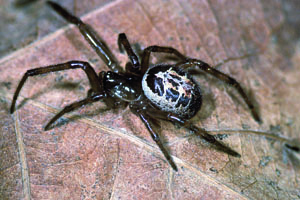
Spiders, including false widows
UK spiders are not particularly aggressive, but some bite and many move indoors in winter. False widow reports worry householders, and a professional residual treatment is a reasonable way to get peace of mind. Where spiders need controlling we usually collect them and clear webs, then follow with a residual insecticidal spray in the specific places they are using.
Not sure what the pest is?
Do not guess. We will visit to examine the situation, identify the pest on the spot where we can, or use monitoring devices and specialist cameras before any treatment. Hours stay flexible, including weekends and evenings, with no extra charge, so you do not have to take a day off to wait in.
Ask for an identification visit